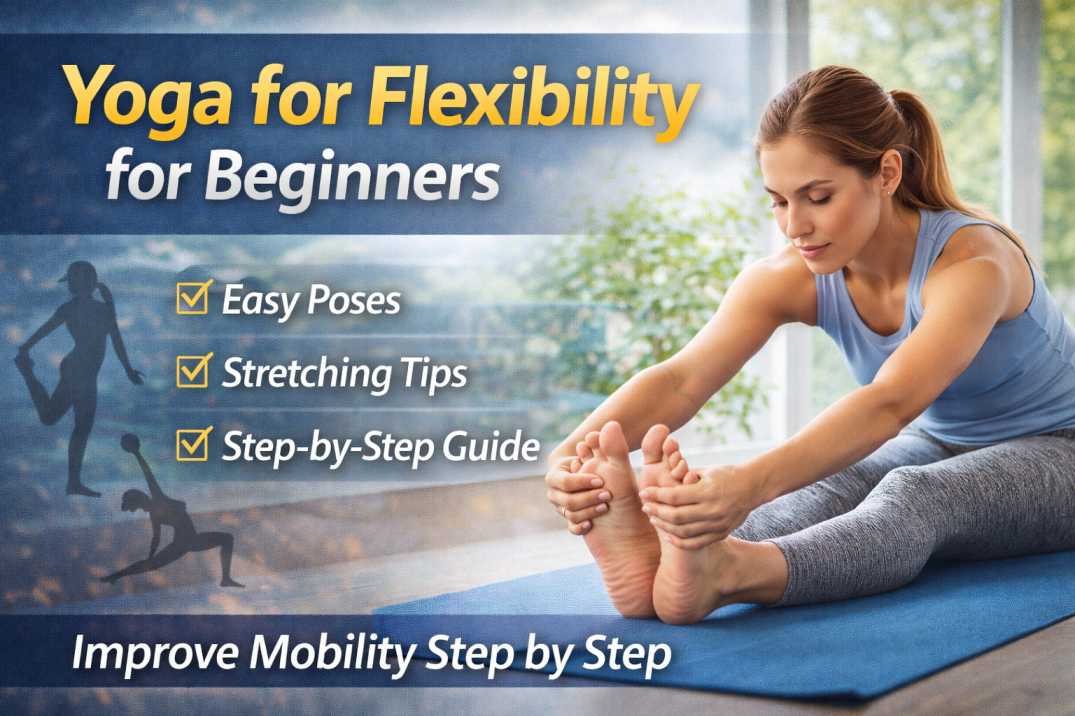
Flexibility is not about touching your toes or performing advanced yoga poses. For beginners, flexibility simply means being able to move your body comfortably, without stiffness, pain, or restriction. In today’s lifestyle—long hours of sitting, minimal movement, stress, and screen time—many people experience tight muscles, reduced mobility, and joint discomfort. This is where yoga for flexibility for beginners becomes a powerful and accessible solution.
Yoga improves flexibility gradually and safely. Unlike intense stretching or gym routines, yoga focuses on controlled movements, mindful breathing, and body awareness. This step-by-step approach helps beginners improve mobility without strain, injury, or overwhelm. In this guide, you’ll learn how yoga supports flexibility, what beginners should expect, and how to build flexibility steadily and sustainably.
Understanding Flexibility and Mobility
Flexibility refers to the ability of muscles to lengthen, while mobility includes joint movement and control. Many beginners assume they are “not flexible enough” for yoga, but flexibility is not a requirement—it is a result of consistent practice.
Common reasons for reduced flexibility include:
-
Prolonged sitting or sedentary lifestyle
-
Lack of regular stretching
-
Muscle imbalances
-
Stress-related muscle tension
-
Previous injuries
Yoga for flexibility for beginners addresses these issues by improving both muscle elasticity and joint mobility together.
Why Yoga Is Ideal for Beginners
Yoga is especially suitable for beginners because it adapts to the body instead of forcing it.
Key reasons yoga works well for beginners:
-
Movements are slow and controlled
-
Poses can be modified easily
-
Breathing supports muscle relaxation
-
Progress happens gradually
-
Focus is on awareness, not performance
Unlike aggressive stretching, yoga teaches the body to relax into movement, which is essential for improving flexibility safely.
Benefits of Yoga for Flexibility for Beginners
Practicing yoga regularly offers benefits beyond just physical flexibility.
Improved Joint Mobility
Yoga gently moves joints through their natural range of motion, reducing stiffness and improving ease of movement.
Reduced Muscle Tightness
Tight muscles in the hips, hamstrings, back, shoulders, and neck gradually release with consistent practice.
Better Posture
Improved flexibility helps correct posture by balancing tight and weak muscles.
Reduced Risk of Injury
Flexible muscles and mobile joints are less prone to strain during daily activities.
Stress Reduction
Deep breathing and mindful movement relax the nervous system, which helps muscles release tension.
Yoga for flexibility for beginners supports both physical and mental well-being.
Common Myths About Flexibility and Yoga
Many beginners hesitate to start yoga due to misconceptions.
“I’m Too Stiff for Yoga”
Yoga is designed to improve stiffness. You don’t need flexibility to begin.
“Flexibility Comes Quickly”
Flexibility develops over time. Yoga emphasizes patience and consistency.
“Stretching Should Hurt”
Pain is not necessary for progress. Yoga encourages gentle, pain-free stretching.
Understanding these myths helps beginners approach yoga with confidence.
How Yoga Improves Flexibility Step by Step
Yoga improves flexibility through a gradual and intelligent process.
Step 1: Awareness
Yoga teaches you to notice tight areas without judgment. Awareness is the first step toward change.
Step 2: Gentle Movement
Slow, controlled movements warm up muscles and prepare them to stretch safely.
Step 3: Breath Integration
Breathing deeply helps relax muscles and reduces resistance to stretching.
Step 4: Consistent Practice
Regular practice allows muscles to lengthen gradually and joints to move more freely.
This step-by-step method makes yoga for flexibility for beginners safe and effective.
Key Areas Beginners Need to Improve Flexibility
Certain areas tend to be tight in most beginners.
Hamstrings
Tight hamstrings limit forward bending and affect posture.
Hips
Restricted hips contribute to lower back discomfort and reduced mobility.
Lower Back
Stiff lower back muscles reduce movement and increase strain.
Shoulders and Neck
Poor posture leads to tight shoulders and neck stiffness.
Yoga addresses these areas gently, improving overall body movement.
Importance of Breathing in Flexibility Training
Breathing plays a crucial role in flexibility.
Shallow breathing keeps muscles tense. Deep, controlled breathing signals the nervous system to relax, allowing muscles to stretch more easily.
In yoga for flexibility for beginners:
-
Inhaling prepares the body for movement
-
Exhaling encourages muscle release
-
Breath keeps movements slow and controlled
Over time, breathing becomes a natural tool for improving flexibility.
How Often Should Beginners Practice Yoga for Flexibility?
Consistency matters more than intensity.
Recommended frequency for beginners:
-
3–5 sessions per week
-
20–40 minutes per session
Short, regular sessions are more effective than occasional long workouts. Even gentle daily practice can lead to noticeable improvements in flexibility.
Beginner-Friendly Yoga Approach for Flexibility
Beginners should focus on:
-
Moving within a comfortable range
-
Avoiding forced stretches
-
Using props like cushions or blocks
-
Resting when needed
Yoga for flexibility for beginners emphasizes listening to the body rather than pushing limits.
Signs You Are Improving Flexibility
Progress in yoga is often subtle at first.
Positive signs include:
-
Reduced stiffness in daily movements
-
Easier bending, sitting, or walking
-
Improved posture
-
Less muscle tension
-
Better body awareness
Flexibility improvements often show up in daily life before they appear in poses.
Mistakes Beginners Should Avoid
Avoiding common mistakes helps prevent injury and frustration.
Forcing the Stretch
Stretching should feel gentle, not painful.
Comparing with Others
Every body progresses differently.
Holding Breath
Breath-holding increases muscle tension.
Inconsistent Practice
Skipping practice slows progress.
Yoga for flexibility for beginners works best with patience and regularity.
Flexibility vs Strength: Finding Balance
Flexibility without strength can lead to instability. Yoga balances flexibility with gentle strengthening.
-
Muscles are stretched and strengthened together
-
Joints are supported through controlled movement
-
Stability improves along with mobility
This balance makes yoga safer than stretching alone.
Lifestyle Habits That Support Flexibility
Yoga works best when combined with supportive daily habits.
Reduce Prolonged Sitting
Take movement breaks during the day.
Stay Hydrated
Hydrated muscles are more elastic.
Manage Stress
Stress tightens muscles; relaxation improves flexibility.
Sleep Well
Recovery supports muscle health.
These habits enhance the effects of yoga for flexibility for beginners.
How Long Does It Take to Become Flexible?
Flexibility is a gradual process.
Most beginners notice:
-
Reduced stiffness within a few weeks
-
Improved mobility within 1–2 months
-
Significant flexibility gains with long-term practice
Progress depends on age, consistency, lifestyle, and past activity levels.
Yoga for Flexibility for Different Age Groups
Young Adults
Yoga counteracts sedentary habits and improves posture.
Middle-Aged Beginners
Yoga restores mobility and reduces joint stiffness.
Seniors
Gentle yoga improves movement confidence and balance.
Yoga for flexibility for beginners can be adapted safely for all age groups.
Mental Benefits of Flexibility Practice
Improving flexibility also impacts mental health.
-
Encourages patience and self-acceptance
-
Reduces stress and anxiety
-
Improves focus and body awareness
-
Builds confidence in movement
Yoga teaches beginners to respect their body’s limits while gently expanding them.
Creating a Sustainable Yoga Routine
To make yoga a long-term habit:
-
Set realistic goals
-
Practice at a comfortable pace
-
Choose a calm, consistent time
-
Focus on how you feel, not how you look
Sustainability is key to long-term flexibility.
Final Thoughts
Starting yoga does not require flexibility—it creates it. Yoga for flexibility for beginners offers a safe, structured, and mindful way to improve mobility step by step. Through gentle movements, conscious breathing, and consistent practice, beginners can gradually release stiffness, move with ease, and feel more comfortable in their bodies.
Flexibility is not about extremes or perfection. It is about freedom of movement, reduced discomfort, and better quality of life. With patience and regular practice, yoga becomes not just a flexibility tool, but a foundation for long-term physical and mental well-being.