Introduction: Understanding Weak Lungs in Today’s Lifestyle
Breathing is the most fundamental function of life, yet it is often taken for granted. With increasing pollution, sedentary habits, stress, post-illness recovery, and poor posture, many people today experience symptoms of weak lungs. These may include shortness of breath, frequent fatigue, low stamina, chest tightness, or difficulty performing even mild physical activity.
Weak lung capacity does not always indicate a serious disease. In many cases, it develops gradually due to shallow breathing, lack of physical movement, prolonged stress, or environmental factors. The good news is that lung strength can be improved naturally with consistent practice.
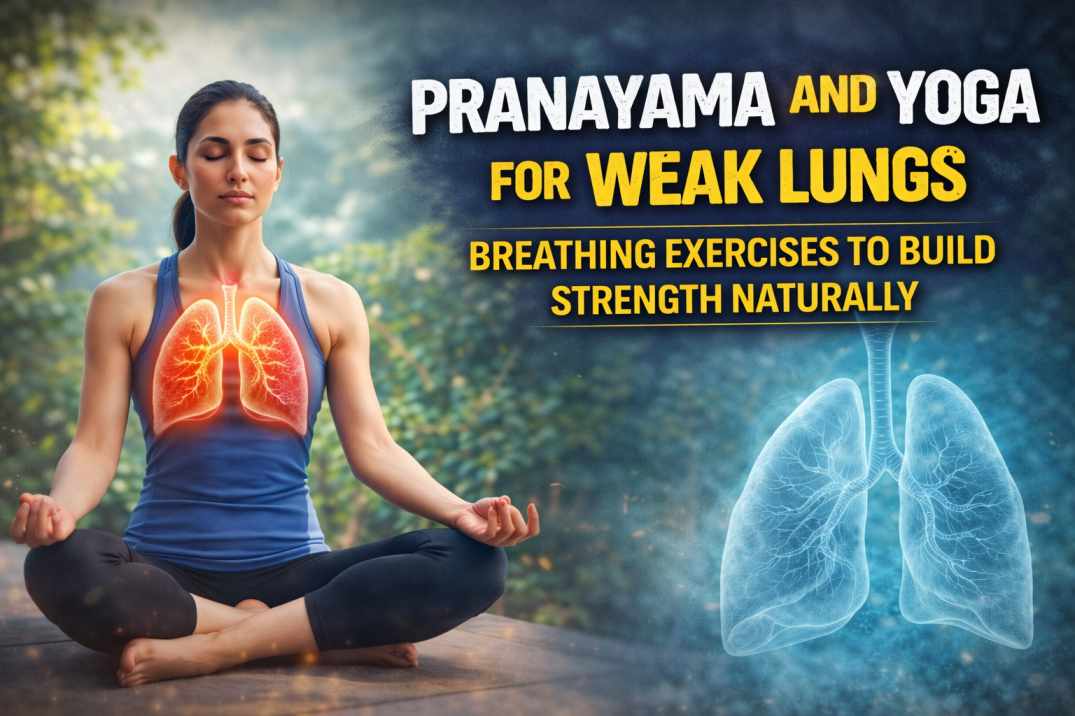
This is where pranayama for weak lungs and gentle yoga play a powerful role. Rooted in ancient yogic science, pranayama focuses on conscious breathing techniques that enhance lung capacity, oxygen intake, and respiratory efficiency. When combined with supportive yoga postures, these practices help rebuild lung strength safely and holistically.
This blog explores how pranayama and yoga can support weak lungs, the best breathing exercises to practice, and how to build respiratory strength naturally over time.
What Does “Weak Lungs” Mean?
Weak lungs generally refer to reduced lung capacity or inefficient breathing rather than structural damage. Common signs include:
-
Breathlessness during mild exertion
-
Frequent coughing or congestion
-
Reduced stamina
-
Difficulty taking deep breaths
-
Anxiety or panic related to breathing
-
Fatigue due to low oxygen delivery
Weak lungs may develop due to pollution exposure, smoking history, long COVID recovery, asthma tendencies, poor posture, stress, or lack of physical activity.
Strengthening the lungs requires retraining how we breathe, increasing oxygen efficiency, and improving the elasticity of lung tissues. Pranayama directly addresses these needs.
How Pranayama Helps Strengthen Weak Lungs
Pranayama is the yogic practice of regulating breath consciously. Unlike normal breathing, pranayama involves awareness, control, and rhythm, which helps activate underused lung areas and improves overall respiratory function.
Key benefits of pranayama for weak lungs include:
-
Increased lung capacity and elasticity
-
Better oxygen absorption and circulation
-
Strengthening of respiratory muscles
-
Improved breath control and endurance
-
Reduction in stress and anxiety-related breath issues
-
Enhanced immunity and energy levels
Over time, regular pranayama practice trains the lungs to work more efficiently, even at rest.
The Science Behind Breathing Exercises and Lung Strength
The lungs are surrounded by muscles such as the diaphragm, intercostal muscles, and accessory breathing muscles. Weak breathing habits lead to stiffness and reduced function of these muscles.
Pranayama practices:
-
Activate the diaphragm more effectively
-
Encourage full inhalation and complete exhalation
-
Improve gas exchange at the alveolar level
-
Reduce inflammation and mucus buildup
-
Calm the nervous system, allowing smoother breathing
By working at both physical and neurological levels, pranayama becomes a powerful tool for respiratory health.
Best Pranayama Techniques for Weak Lungs
The following pranayama techniques are gentle, effective, and suitable for most people when practiced correctly and consistently.
Deep Diaphragmatic Breathing
This is the foundation of all pranayama practices and essential for weak lungs.
How it works:
-
Encourages full lung expansion
-
Strengthens the diaphragm
-
Reduces shallow chest breathing
Practice method:
-
Sit or lie comfortably
-
Place one hand on the chest and one on the abdomen
-
Inhale slowly through the nose, expanding the abdomen
-
Exhale gently, allowing the abdomen to fall
-
Keep the chest relatively still
Practicing this for 5–10 minutes daily improves breathing efficiency and prepares the lungs for advanced pranayama.
Anulom Vilom (Alternate Nostril Breathing)
Anulom Vilom is one of the most effective forms of pranayama for weak lungs, suitable for beginners and advanced practitioners alike.
Benefits:
-
Improves lung capacity
-
Enhances oxygen flow
-
Balances the nervous system
-
Reduces breathlessness
Practice method:
-
Sit in a comfortable posture
-
Close the right nostril and inhale through the left
-
Close the left nostril and exhale through the right
-
Inhale through the right nostril
-
Exhale through the left
This cycle strengthens the lungs gradually while calming the mind.
Bhramari Pranayama (Humming Bee Breath)
Bhramari is particularly helpful for people who experience anxiety, chest tightness, or stress-related breathing issues.
Benefits:
-
Calms the respiratory system
-
Improves breath control
-
Reduces inflammation and tension
-
Supports lung healing
Practice method:
-
Inhale deeply through the nose
-
Exhale slowly while making a humming sound
-
Focus on prolonged, smooth exhalation
Long exhalations help remove stale air from the lungs, making space for fresh oxygen.
Ujjayi Pranayama (Victorious Breath)
Ujjayi breathing strengthens lung muscles and improves breath awareness.
Benefits:
-
Builds respiratory endurance
-
Improves oxygen efficiency
-
Supports gentle lung expansion
Practice method:
-
Inhale through the nose with slight throat constriction
-
Exhale through the nose, maintaining a soft sound
-
Keep the breath slow and controlled
This pranayama is especially beneficial during yoga asana practice.
Kapalbhati (With Caution)
Kapalbhati involves forceful exhalations and passive inhalations. It can strengthen respiratory muscles but should be practiced carefully.
Benefits:
-
Clears mucus from lungs
-
Improves lung efficiency
-
Enhances circulation
Important note:
Kapalbhati is not recommended for severe lung weakness, heart conditions, or during recovery without guidance. Beginners should practice under professional supervision.
Yoga Postures That Support Lung Strength
While pranayama focuses on breath, yoga postures help open the chest, improve posture, and create space for the lungs to expand fully.
Bhujangasana (Cobra Pose)
This posture opens the chest and lungs.
Benefits:
-
Expands the rib cage
-
Improves lung elasticity
-
Encourages deeper breathing
Gentle backbends are especially helpful for people who sit for long hours.
Setu Bandhasana (Bridge Pose)
Bridge pose improves circulation and chest expansion.
Benefits:
-
Strengthens respiratory muscles
-
Improves oxygen supply
-
Reduces chest tightness
Ardha Matsyendrasana (Seated Spinal Twist)
Twists help improve lung function indirectly by massaging internal organs.
Benefits:
-
Enhances breathing capacity
-
Improves spinal flexibility
-
Supports detoxification
Sukhasana with Breath Awareness
Simple seated postures combined with mindful breathing can significantly improve lung strength over time.
Benefits:
-
Encourages relaxed, deep breathing
-
Improves posture
-
Reduces stress-related breath restriction
Creating a Daily Routine for Weak Lungs
Consistency matters more than intensity when strengthening lungs.
A simple daily routine may include:
-
5 minutes of diaphragmatic breathing
-
5–7 minutes of Anulom Vilom
-
5 minutes of Bhramari
-
Gentle yoga stretches focused on chest opening
Practicing daily for 20–30 minutes can show noticeable improvement within weeks.
Lifestyle Support for Lung Health
Along with pranayama and yoga, certain lifestyle habits support lung recovery and strength.
These include:
-
Avoiding smoking and passive smoke
-
Reducing exposure to pollution
-
Maintaining proper posture
-
Staying hydrated
-
Eating antioxidant-rich foods
-
Managing stress and anxiety
Pranayama works best when supported by mindful lifestyle choices.
Who Can Practice Pranayama for Weak Lungs?
Pranayama is suitable for:
-
Adults with low stamina
-
People recovering from respiratory illnesses
-
Individuals exposed to pollution
-
Those with anxiety-related breath issues
-
Seniors seeking gentle lung strengthening
However, people with severe respiratory conditions should consult a qualified yoga therapist before starting.
Common Mistakes to Avoid
When practicing pranayama for weak lungs, avoid:
-
Overexerting or forcing breath
-
Practicing without awareness
-
Holding breath for too long initially
-
Skipping warm-up breathing
-
Inconsistent practice
Gentleness and patience are key to lung recovery.
How Long Does It Take to See Results?
Results vary depending on age, condition, and consistency. Most people notice:
-
Improved breath awareness within 1–2 weeks
-
Increased stamina within 3–4 weeks
-
Better lung capacity over 2–3 months
Long-term practice leads to lasting respiratory resilience.
Final Thoughts
Weak lungs do not have to define your quality of life. With regular and mindful practice, pranayama for weak lungs offers a natural, effective, and sustainable way to rebuild respiratory strength from within.
By combining conscious breathing techniques with supportive yoga postures and healthy lifestyle habits, you can improve lung capacity, increase energy levels, and breathe with greater ease and confidence.
Pranayama is not just about breathing better—it is about living better. Consistent practice empowers you to restore balance, vitality, and inner calm, one breath at a time.