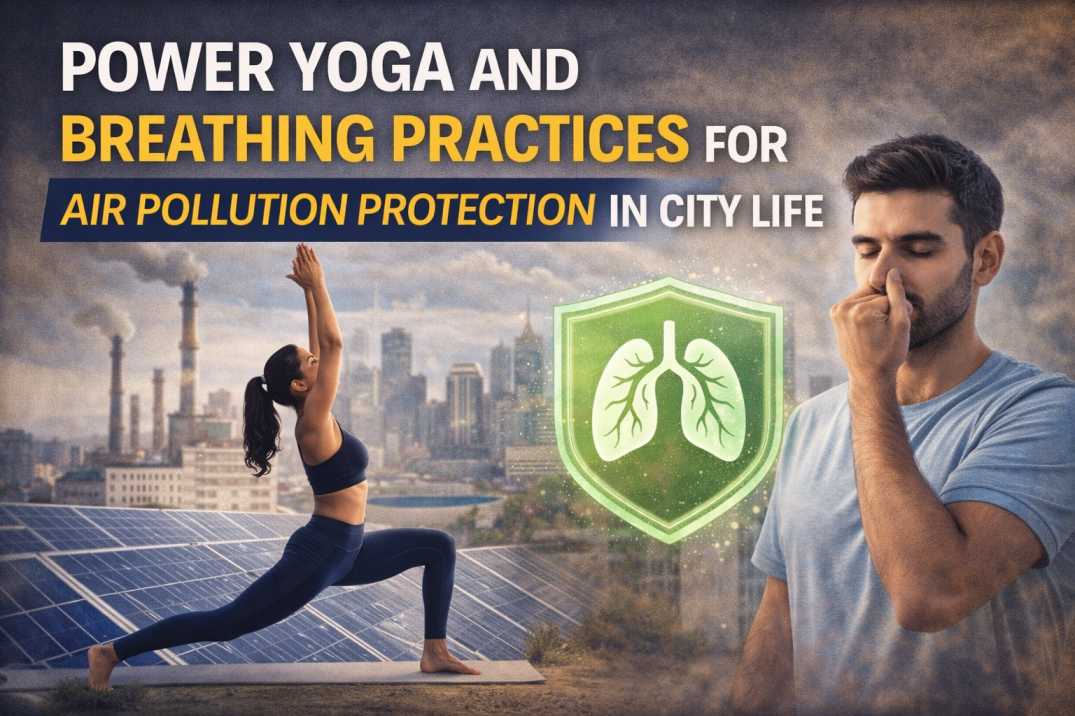
Urban life offers opportunity, convenience, and growth—but it also brings a serious health challenge: air pollution. From vehicle emissions and industrial smoke to construction dust and indoor pollutants, city dwellers are constantly exposed to harmful toxins that directly affect the lungs, heart, immune system, and overall vitality.
While avoiding pollution entirely is unrealistic, strengthening the body’s internal defense system is possible. A conscious combination of power yoga and breathing practices offers an effective, natural approach to yoga for air pollution protection, helping the body adapt, detoxify, and build resilience against polluted environments.
This blog explores how power yoga and targeted breathwork can protect respiratory health, improve lung capacity, and support overall well-being for people living in cities.
Understanding the Impact of Air Pollution on the Body
Air pollution contains fine particulate matter (PM2.5 and PM10), carbon monoxide, nitrogen oxides, sulfur dioxide, and volatile organic compounds. These pollutants enter the body through breathing and can lead to both short-term and long-term health issues.
Common effects of prolonged pollution exposure include:
-
Reduced lung capacity and shallow breathing
-
Chronic cough, allergies, and sinus congestion
-
Increased risk of asthma and bronchitis
-
Frequent fatigue and headaches
-
Weakened immunity
-
Higher stress and anxiety levels
Over time, polluted air causes inflammation in the respiratory tract and reduces the body’s ability to oxygenate blood efficiently. This is where yoga becomes not just beneficial, but essential.
Why Yoga for Air Pollution Protection Works
Yoga is a holistic practice that addresses the body, breath, and nervous system together. Unlike medication, yoga strengthens the body’s natural defense mechanisms rather than suppressing symptoms.
Yoga for air pollution protection helps by:
-
Expanding lung capacity and efficiency
-
Improving oxygen circulation to tissues
-
Enhancing detoxification through breath and movement
-
Strengthening respiratory muscles
-
Reducing stress-induced inflammation
-
Improving posture for better breathing
When practiced regularly, yoga trains the body to use oxygen more efficiently, even when air quality is compromised.
What Makes Power Yoga Effective for Urban Lifestyles
Power yoga is a dynamic and strength-based style of yoga that builds stamina, muscular strength, and cardiovascular efficiency. For city residents exposed to pollution, power yoga plays a vital role in improving oxygen utilization and metabolic health.
Benefits of power yoga in polluted environments include:
-
Increased lung endurance
-
Improved circulation and heart health
-
Enhanced detox through sweat and breath
-
Better posture and chest expansion
-
Stronger immune response
Power yoga keeps the respiratory system active and adaptable, helping the body cope with environmental stressors.
Power Yoga Asanas That Support Air Pollution Protection
Surya Namaskar (Sun Salutation)
Surya Namaskar is one of the most effective sequences for respiratory health. It combines movement, breath, and circulation in a rhythmic flow.
Benefits:
-
Improves lung expansion
-
Enhances oxygen delivery
-
Stimulates detoxification
-
Boosts immunity and metabolism
Practicing multiple rounds daily strengthens the respiratory and cardiovascular systems.
Utkatasana (Chair Pose)
This pose builds stamina and challenges the lungs to work efficiently under effort.
Benefits:
-
Strengthens breathing muscles
-
Improves oxygen usage
-
Builds endurance
It helps train the body to manage breath even during stress or exertion.
Virabhadrasana I & II (Warrior Poses)
Warrior poses open the chest and strengthen the entire body.
Benefits:
-
Expands the rib cage
-
Encourages deeper inhalation
-
Improves posture and balance
Strong posture directly supports better breathing in polluted environments.
Adho Mukha Svanasana (Downward-Facing Dog)
This pose improves circulation and allows the lungs to expand more freely.
Benefits:
-
Enhances oxygen flow to the upper body
-
Reduces stiffness in the chest and shoulders
-
Supports respiratory detox
Bhujangasana (Cobra Pose)
Cobra pose is especially helpful for people with shallow breathing habits.
Benefits:
-
Opens the chest and lungs
-
Strengthens the spine
-
Improves breathing depth
It counteracts the collapsed posture caused by long hours of sitting and pollution exposure.
Importance of Breathing Practices for Air Pollution Protection
Breathing practices, or pranayama, are the most direct tools in yoga for air pollution protection. They strengthen the lungs, clear airways, and improve oxygen efficiency.
Polluted air often leads to shallow chest breathing, which limits oxygen intake. Pranayama retrains the body to breathe deeply and consciously.
Essential Pranayama Techniques for City Life
Anulom Vilom (Alternate Nostril Breathing)
This practice balances the nervous system and improves respiratory efficiency.
Benefits:
-
Enhances lung function
-
Reduces airway irritation
-
Improves oxygen absorption
-
Calms pollution-induced stress
Regular practice improves the body’s adaptability to environmental stress.
Bhramari (Humming Bee Breath)
Bhramari has a calming and healing effect on the respiratory system.
Benefits:
-
Reduces inflammation in airways
-
Improves nitric oxide release, which supports lung health
-
Calms anxiety and mental fatigue
This practice is especially helpful during high-pollution days.
Deep Diaphragmatic Breathing
Often overlooked, diaphragmatic breathing is foundational for lung strength.
Benefits:
-
Strengthens the diaphragm
-
Improves lung capacity
-
Reduces shallow breathing patterns
Practicing this daily builds long-term respiratory resilience.
Ujjayi Breathing
Ujjayi breath creates controlled resistance during breathing.
Benefits:
-
Improves breath awareness
-
Strengthens respiratory muscles
-
Enhances oxygen control during movement
It pairs especially well with power yoga flows.
How Yoga Supports Detoxification in Polluted Environments
Yoga supports detox not just through sweating, but also by improving circulation, lymphatic flow, and oxygen delivery.
Key detox benefits include:
-
Better removal of carbon dioxide
-
Improved blood oxygen levels
-
Enhanced cellular repair
-
Reduced oxidative stress
Over time, the body becomes more efficient at handling environmental toxins.
The Role of Stress Reduction in Pollution Protection
Pollution affects not only the lungs but also the nervous system. Chronic exposure increases stress hormones, which worsen inflammation and weaken immunity.
Yoga reduces stress by:
-
Activating the parasympathetic nervous system
-
Lowering cortisol levels
-
Improving sleep quality
-
Enhancing emotional balance
Reduced stress directly supports respiratory and immune health.
Who Should Practice Yoga for Air Pollution Protection
These practices are especially beneficial for:
-
Urban residents and commuters
-
Office workers and IT professionals
-
Individuals with allergies or mild asthma
-
People experiencing frequent fatigue or breathlessness
-
Anyone seeking preventive health care
Yoga can be adapted for beginners, seniors, and people with limited mobility.
How Often Should You Practice?
For best results:
-
Power yoga: 4–5 times per week
-
Pranayama: daily, even 10–15 minutes
-
Gentle stretches and relaxation: daily
Consistency matters more than intensity. Regular practice builds lasting protection.
Supporting Lifestyle Habits for Better Results
Yoga works best when combined with mindful lifestyle choices.
Helpful habits include:
-
Practicing yoga indoors during high-pollution hours
-
Staying well-hydrated
-
Maintaining good indoor ventilation
-
Avoiding outdoor workouts during peak pollution times
-
Following a balanced, immunity-supportive diet
Together, these habits strengthen the impact of yoga for air pollution protection.
A Holistic Approach to Urban Wellness
At Studio Healthy Lifestyle, yoga is viewed as more than physical exercise. It is a complete system of healing that integrates movement, breath, nutrition, and lifestyle awareness to help individuals thrive even in challenging environments.
By combining power yoga with conscious breathing and holistic lifestyle support, individuals can build inner strength that protects them against the unseen effects of urban pollution.
Final Thoughts
Living in a city does not mean compromising your health. While air pollution is a reality of urban life, its impact can be significantly reduced through mindful, consistent practice.
Yoga for air pollution protection empowers you to strengthen your lungs, improve oxygen efficiency, calm your nervous system, and enhance overall resilience. Power yoga builds physical strength and stamina, while breathing practices support respiratory health from within.
With regular practice, yoga becomes a protective shield—helping you breathe better, feel stronger, and live healthier, even in the heart of the city.