
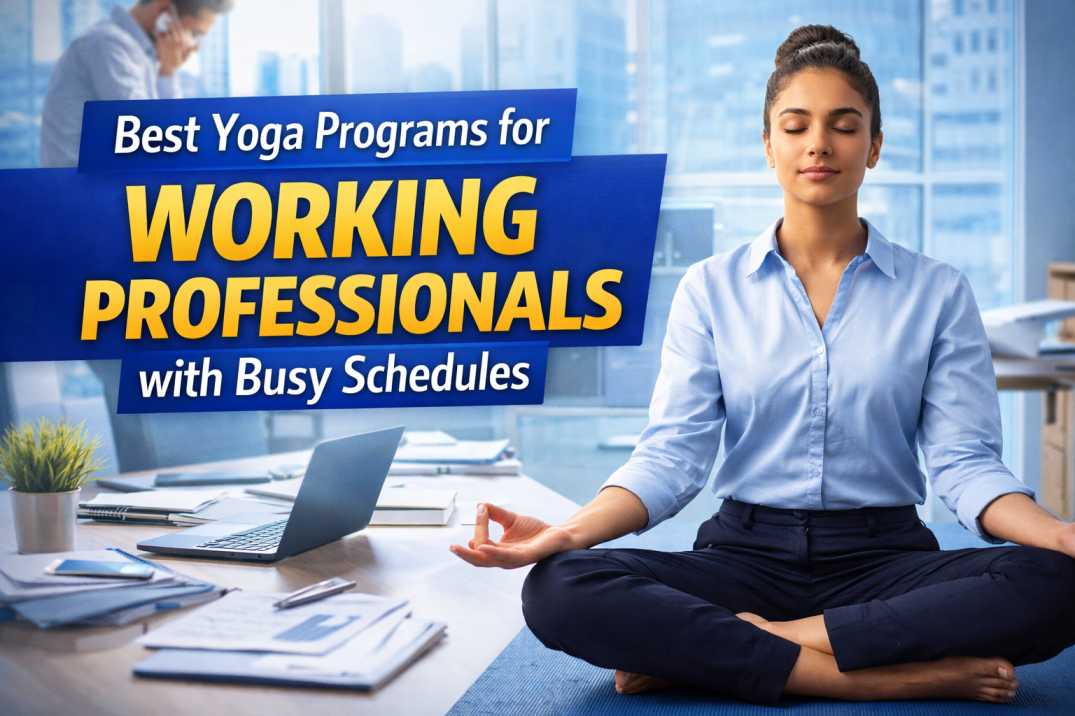
In today’s fast-paced world, working professionals often find themselves juggling long hours, tight deadlines, and constant mental pressure. Between meetings, commuting, and personal responsibilities, maintaining physical and mental well-being can become a challenge. This is where yoga for working professionals emerges as a practical and effective solution.
Yoga is not just about flexibility or fitness—it is a holistic approach that helps improve focus, reduce stress, enhance productivity, and maintain overall health. The best part is that it can be adapted to even the busiest schedules. In this blog, we explore the best yoga programs tailored for working professionals and how they can seamlessly fit into daily routines.
Why Working Professionals Need Yoga
Modern work environments demand long hours of sitting, screen exposure, and continuous mental engagement. This lifestyle can lead to:
- Back and neck pain
- Poor posture
- Increased stress and anxiety
- Reduced energy levels
- Sleep disturbances
Yoga addresses these issues by combining physical movement, breathing techniques, and mindfulness. It helps restore balance in both body and mind, making it an essential practice for professionals.
The Concept of Yoga for Busy Schedules
One of the biggest misconceptions about yoga is that it requires hours of practice. In reality, even short and consistent sessions can deliver significant benefits.
Yoga for working professionals focuses on:
- Time-efficient routines (10–30 minutes)
- Simple and effective poses
- Easy integration into daily schedules
- Minimal equipment requirements
The goal is not perfection but consistency.
Morning Yoga Programs for a Productive Start
Starting your day with yoga sets a positive tone and boosts energy levels. Morning sessions help awaken the body and improve mental clarity.
A typical morning routine may include:
- Gentle stretches to release stiffness
- Sun salutations for full-body activation
- Breathing exercises to improve oxygen flow
- Short meditation for focus
Even a 15-minute morning practice can enhance productivity and reduce fatigue throughout the day.
Desk Yoga for Office Hours
Sitting for long hours can lead to stiffness and discomfort. Desk yoga offers simple movements that can be performed at the workplace without drawing attention.
Effective desk yoga practices include:
- Neck rolls to relieve tension
- Shoulder stretches to reduce stiffness
- Seated spinal twists for flexibility
- Wrist and finger stretches for those using keyboards
These small movements help maintain circulation and prevent long-term health issues.
Evening Yoga for Stress Relief
After a long day, the body and mind need relaxation. Evening yoga programs focus on releasing accumulated stress and promoting better sleep.
Key elements include:
- Gentle stretching to relax muscles
- Restorative poses to calm the nervous system
- Deep breathing to reduce anxiety
- Mindfulness techniques to unwind
This practice helps transition from work mode to relaxation mode.
Weekend Deep Practice Sessions
For those with limited time during weekdays, weekends offer an opportunity for longer sessions. These programs focus on deeper stretching, strength building, and mental relaxation.
Weekend yoga may include:
- Full-body sequences
- Advanced flexibility exercises
- Guided meditation sessions
- Breathwork for deeper relaxation
These sessions help reset the body and prepare for the upcoming week.
Therapeutic Yoga for Work-Related Issues
Many professionals experience specific health problems due to their work routines. Therapeutic yoga programs are designed to address these issues.
Common concerns and solutions include:
- Back pain: Strengthening and stretching exercises
- Neck stiffness: Mobility-focused movements
- Eye strain: Relaxation techniques and palming
- Stress: Breathing and meditation practices
Customized therapeutic yoga ensures targeted relief and long-term improvement.
Breathwork for Mental Clarity
Pranayama, or controlled breathing, plays a vital role in yoga for working professionals. It helps manage stress, improve concentration, and boost energy levels.
Popular techniques include:
- Deep breathing for relaxation
- Alternate nostril breathing for balance
- Rapid breathing techniques for energy
Even a few minutes of breathwork can significantly impact mental clarity and emotional stability.
Yoga for Better Posture
Poor posture is a common issue among professionals who spend hours at desks. Yoga helps correct posture by strengthening core muscles and improving alignment.
Benefits include:
- Reduced back and neck pain
- Improved confidence and body language
- Better breathing capacity
- Enhanced overall comfort
Regular practice gradually trains the body to maintain proper posture naturally.
Short Yoga Routines for Busy Days
On particularly hectic days, even short sessions can make a difference. Micro-yoga routines are designed to fit into tight schedules.
Examples include:
- 5-minute stretching breaks
- Quick breathing exercises between meetings
- Short relaxation techniques before sleep
These small practices accumulate over time and contribute to overall well-being.
Integrating Yoga into Daily Life
Consistency is the key to success in yoga. Instead of treating it as an additional task, professionals can integrate it into their daily routine.
Practical tips include:
- Setting a fixed time for practice
- Keeping a yoga mat accessible
- Using reminders for short breaks
- Combining yoga with existing habits
Making yoga a part of daily life ensures long-term benefits.
The Role of Guided Programs
Many working professionals benefit from structured and guided yoga programs. These programs provide direction, motivation, and accountability.
Advantages include:
- Personalized routines based on needs
- Professional guidance to avoid injuries
- Progress tracking and goal setting
- Flexibility to practice at home
Guided programs make it easier to stay consistent and achieve results.
Yoga and Productivity
One of the most significant benefits of yoga is its impact on productivity. A healthy body and calm mind contribute to better performance at work.
Yoga helps:
- Improve focus and concentration
- Reduce mental fatigue
- Enhance decision-making abilities
- Increase overall efficiency
Professionals who practice yoga often experience improved work performance and job satisfaction.
Mental Health Benefits
Stress and burnout are common challenges in professional life. Yoga provides effective tools to manage mental health.
Key benefits include:
- Reduced anxiety and stress
- Improved emotional balance
- Better sleep quality
- Increased resilience
By addressing both physical and mental aspects, yoga supports holistic well-being.
Choosing the Right Yoga Program
Not all yoga programs are the same. Working professionals should choose programs that align with their schedules and goals.
Considerations include:
- Duration and flexibility of sessions
- Focus areas such as fitness, relaxation, or therapy
- Level of difficulty
- Availability of online or offline options
Selecting the right program ensures a sustainable and enjoyable practice.
Long-Term Benefits of Yoga for Professionals
The impact of yoga goes beyond immediate relief. With consistent practice, professionals can experience long-term transformation.
Benefits include:
- Improved physical health
- Enhanced mental clarity
- Better work-life balance
- Increased energy and vitality
- Greater overall happiness
Yoga becomes not just a practice but a lifestyle.
Conclusion
Yoga for working professionals is no longer a luxury—it is a necessity in today’s demanding work environment. With flexible and time-efficient programs, it is possible to incorporate yoga into even the busiest schedules.
From morning routines that boost productivity to evening practices that promote relaxation, yoga offers a comprehensive solution for maintaining health and balance. By choosing the right programs and staying consistent, working professionals can transform their daily lives and achieve lasting well-being.
In a world where time is limited and stress is constant, yoga provides a simple yet powerful way to reconnect with oneself and create a healthier, more balanced lifestyle.