Air quality has become a daily concern in many Indian cities. With rising pollution levels, smog, dust, vehicle emissions, and industrial pollutants, breathing clean air is no longer guaranteed. High AQI (Air Quality Index) days can strain the lungs, reduce oxygen efficiency, and trigger respiratory discomfort even in healthy individuals.
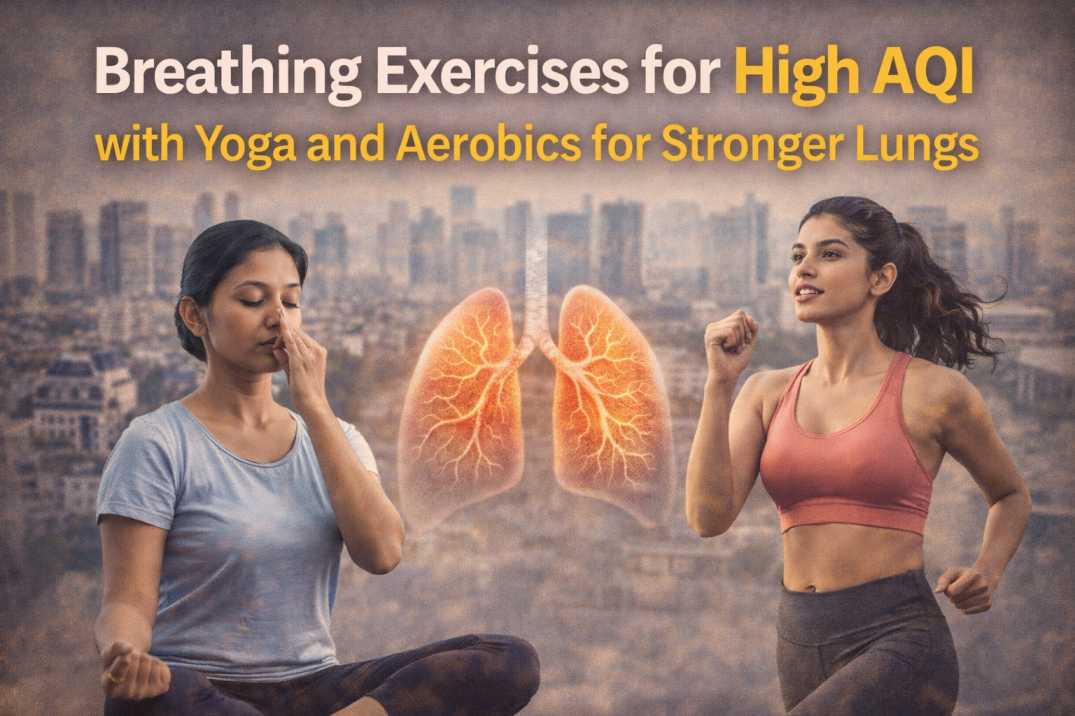
On such days, protecting lung health becomes essential. While avoiding outdoor exposure is one part of the solution, strengthening the lungs from within is equally important. This is where breathing exercises for high AQI, combined with yoga and carefully chosen aerobic practices, play a powerful role.
This blog explores how breathing exercises, yoga postures, and controlled aerobic movements can help counter the effects of pollution, improve lung capacity, and build long-term respiratory resilience.
Understanding High AQI and Its Impact on Lungs
AQI measures the level of pollutants such as PM2.5, PM10, nitrogen dioxide, sulfur dioxide, and ozone in the air. When AQI levels rise, these pollutants enter the respiratory system with every breath.
Common effects of high AQI on lung health include:
-
Shallow or laboured breathing
-
Chest tightness
-
Reduced lung capacity
-
Increased mucus production
-
Irritation in airways
-
Lower oxygen absorption
-
Fatigue and headaches
Long-term exposure without proper care can weaken respiratory muscles and reduce overall stamina.
Why Breathing Exercises Are Crucial During High AQI
Breathing exercises are not just relaxation techniques. They are targeted practices that:
-
Improve oxygen uptake
-
Strengthen respiratory muscles
-
Clear stagnant air from lungs
-
Enhance lung elasticity
-
Reduce inflammation caused by pollutants
Practicing breathing exercises for high AQI helps the lungs function efficiently even when external air quality is poor.
How Yoga and Aerobics Support Lung Health in Pollution
Yoga and aerobics support lung health in different but complementary ways.
Yoga focuses on:
-
Deep, controlled breathing
-
Chest and rib cage expansion
-
Nervous system balance
-
Stress reduction
Aerobics, when adapted correctly, focus on:
-
Improving cardiovascular efficiency
-
Enhancing oxygen delivery
-
Building stamina and endurance
Together, they create a balanced approach to respiratory strengthening.
Key Principles for Practicing on High AQI Days
Before starting any breathing or movement practice during high pollution days, keep these principles in mind:
-
Prefer indoor practice with windows closed
-
Avoid intense outdoor workouts
-
Focus on slow, controlled breathing
-
Stop immediately if dizziness or breathlessness occurs
-
Practice consistency over intensity
The goal is protection and strengthening, not overexertion.
Best Breathing Exercises for High AQI
Diaphragmatic (Abdominal) Breathing
This is the foundation of all lung-strengthening practices.
How it helps:
-
Encourages full lung expansion
-
Reduces shallow chest breathing
-
Improves oxygen efficiency
Practicing diaphragmatic breathing daily trains the lungs to use their full capacity, even in polluted environments.
Anulom Vilom (Alternate Nostril Breathing)
One of the most effective breathing exercises for high AQI.
Benefits:
-
Improves lung efficiency
-
Balances oxygen flow
-
Reduces airway irritation
-
Supports detoxification
This practice is gentle and suitable for all age groups.
Bhramari (Humming Bee Breath)
Bhramari is especially beneficial in polluted environments.
Benefits:
-
Increases nitric oxide production in nasal passages
-
Reduces airway inflammation
-
Calms stress-induced breathing issues
The humming vibration helps soothe irritated respiratory tissues.
Deep Nasal Breathing
Breathing through the nose filters pollutants more effectively than mouth breathing.
Benefits:
-
Activates nasal filtration mechanisms
-
Improves oxygen absorption
-
Reduces direct pollutant entry into lungs
Practicing conscious nasal breathing builds a protective habit for daily life.
Slow Controlled Exhalation
Longer exhalations help remove stale air from the lungs.
Benefits:
-
Clears residual pollutants
-
Improves lung elasticity
-
Enhances respiratory rhythm
This technique is particularly useful during rest or meditation.
Yoga Poses That Support Breathing on High AQI Days
Sukhasana with Breath Awareness
A simple seated pose that supports controlled breathing.
Benefits:
-
Encourages diaphragmatic breathing
-
Improves posture for lung expansion
-
Calms the nervous system
Ideal as a starting point for any breathing practice.
Bhujangasana (Cobra Pose)
This pose opens the chest and lungs.
Benefits:
-
Improves chest expansion
-
Counters slouched posture
-
Enhances breathing depth
It is especially helpful for people who sit for long hours.
Setu Bandhasana (Bridge Pose)
Bridge pose improves oxygen circulation.
Benefits:
-
Expands the chest
-
Strengthens respiratory muscles
-
Improves blood flow to lungs
It should be practiced slowly with breath awareness.
Matsyasana (Fish Pose)
One of the best poses for lung opening.
Benefits:
-
Deep chest expansion
-
Improves lung capacity
-
Reduces respiratory fatigue
This pose is highly beneficial for shallow breathers.
Adho Mukha Svanasana (Downward-Facing Dog)
A mild inversion that supports breathing.
Benefits:
-
Improves circulation
-
Encourages deeper inhalation
-
Releases tension in shoulders and chest
This pose should be done gently during high AQI days.
Aerobic Practices Suitable for High AQI Conditions
Aerobics does not mean high-intensity workouts on polluted days. Instead, focus on low-impact, controlled movements indoors.
Indoor Low-Impact Aerobics
Examples include:
-
Marching in place
-
Slow step movements
-
Controlled arm swings
-
Gentle rhythmic movements
Benefits:
-
Improves cardiovascular efficiency
-
Enhances oxygen delivery
-
Builds stamina without straining lungs
Always pair aerobics with conscious breathing.
Breathing-Coordinated Movement
Combining movement with breath enhances lung efficiency.
Benefits:
-
Trains lungs to adapt to activity
-
Improves breathing rhythm
-
Reduces breathlessness
This method is safer than fast-paced workouts during high AQI.
Practices to Avoid During High AQI
Certain activities can strain the lungs when air quality is poor.
Avoid:
-
Outdoor running or cycling
-
High-intensity interval training outdoors
-
Forced or aggressive breathing techniques
-
Breath retention for long durations
Protecting the lungs is more important than pushing fitness limits.
How Regular Practice Builds Long-Term Lung Resilience
Consistent practice of breathing exercises for high AQI helps:
-
Increase lung capacity
-
Improve oxygen utilization
-
Reduce sensitivity to pollutants
-
Strengthen respiratory muscles
-
Improve recovery after exposure
Over time, the lungs become more efficient and resilient.
Role of Stress Reduction in Lung Health
Pollution-related anxiety can worsen breathing patterns.
Yoga and breathing exercises:
-
Calm the nervous system
-
Reduce stress-induced breath restriction
-
Improve breathing rhythm
Mental relaxation directly supports physical breathing efficiency.
Supporting Habits for Better Lung Protection
Breathing exercises work best when supported by healthy habits:
-
Stay hydrated to keep airways moist
-
Maintain good indoor air quality
-
Avoid smoking and passive smoke
-
Practice good posture
-
Eat antioxidant-rich foods
These habits enhance the benefits of yoga and breathing practices.
Who Should Practice These Techniques
Breathing exercises for high AQI are beneficial for:
-
Urban residents
-
Office workers
-
Children and teenagers
-
Older adults
-
People with mild respiratory sensitivity
-
Anyone exposed to pollution regularly
Practices can be adapted based on age and fitness level.
A Holistic Wellness Approach
At Studio Healthy Lifestyle, lung health is approached holistically by combining yoga, pranayama, mindful movement, nutrition, and lifestyle coaching. This integrated approach helps individuals not only cope with high AQI conditions but also build long-term respiratory strength and overall vitality.
Rather than focusing only on avoiding pollution, the focus is on empowering the body to handle environmental challenges naturally.
Creating a Simple Daily Routine for High AQI Days
A balanced routine may include:
-
10 minutes of diaphragmatic breathing
-
10 minutes of pranayama
-
15–20 minutes of gentle yoga postures
-
10 minutes of low-impact indoor aerobics
Even short, consistent practice delivers meaningful benefits.
Final Thoughts
High AQI levels are becoming a regular part of modern urban life, but compromised lung health does not have to be. With the right approach, it is possible to protect and strengthen the respiratory system despite environmental challenges.
Breathing exercises for high AQI, combined with yoga and carefully adapted aerobic practices, offer a natural, effective, and sustainable way to support lung health. By practicing conscious breathing, gentle movement, and mindful living, you can improve oxygen efficiency, reduce pollution impact, and build stronger lungs over time.
Every breath matters. When practiced with awareness and consistency, these techniques transform breathing from a passive function into a powerful tool for resilience, health, and long-term well-being.