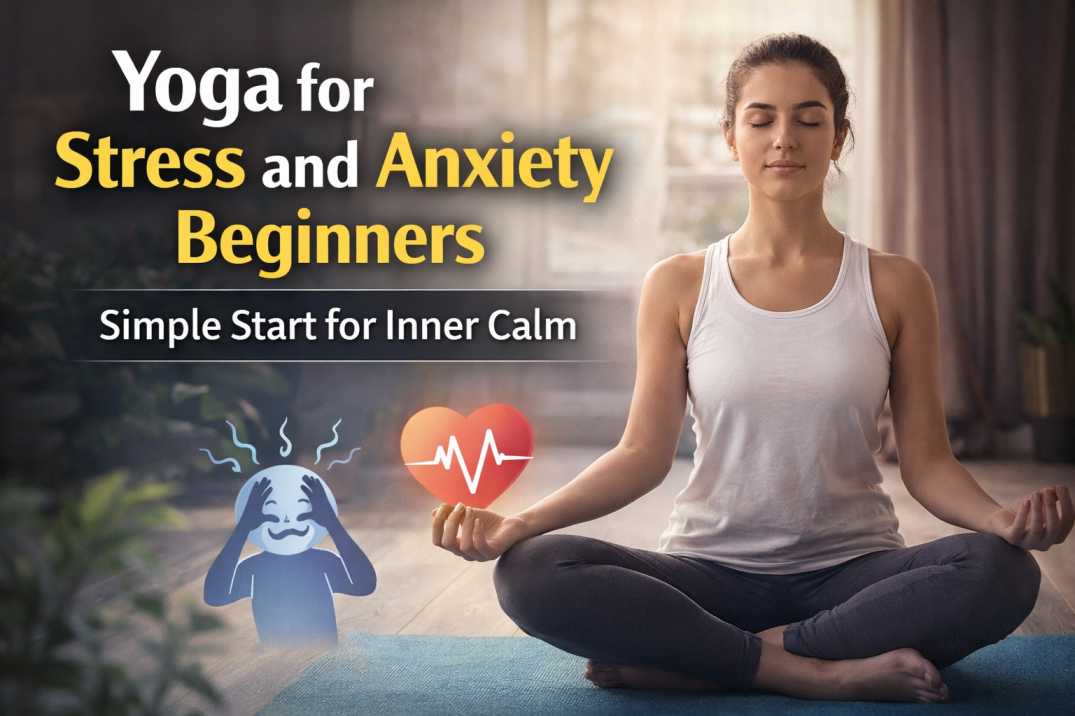
Stress and anxiety have quietly become part of everyday life. Long working hours, constant digital exposure, irregular routines, and emotional pressures can leave the mind restless and the body tense. For beginners looking for a natural, gentle, and sustainable way to feel calmer, yoga offers a powerful solution.
This complete beginner’s guide to yoga for stress and anxiety beginners explains how yoga works, why it is effective, and how you can start safely—even if you have never practiced yoga before.
Understanding Stress and Anxiety in Modern Life
Stress is the body’s natural response to pressure or challenges. Anxiety, on the other hand, is a persistent feeling of worry, fear, or unease, often without an immediate cause. While occasional stress is normal, chronic stress and anxiety can affect sleep, digestion, immunity, focus, and emotional well-being.
Common symptoms include:
-
Constant overthinking
-
Tight shoulders, neck pain, or headaches
-
Shallow breathing
-
Fatigue or restlessness
-
Mood swings and irritability
-
Difficulty sleeping
Yoga works at both the physical and mental levels, helping the nervous system shift from a state of tension to relaxation.
Why Yoga Helps with Stress and Anxiety
Yoga is not just physical exercise. It combines movement, breath awareness, and mindfulness, which together calm the nervous system.
For beginners, yoga helps by:
-
Reducing cortisol (stress hormone) levels
-
Activating the parasympathetic nervous system
-
Improving breathing patterns
-
Releasing physical tension stored in the body
-
Creating mental clarity and emotional balance
This is why yoga for stress and anxiety beginners is often recommended as a first step toward holistic well-being.
Can Beginners Practice Yoga for Stress and Anxiety?
Absolutely. Yoga for stress and anxiety is gentle, slow, and adaptable. You do not need flexibility, strength, or prior experience. The focus is on awareness, not performance.
Beginners should remember:
-
Yoga is not about perfection
-
Comfort is more important than depth of poses
-
Breathing matters more than flexibility
-
Consistency matters more than duration
Even 15–20 minutes a day can create noticeable changes.
Best Time to Practice Yoga for Stress and Anxiety
There is no single “perfect” time, but beginners often benefit from:
-
Morning practice: Sets a calm tone for the day
-
Evening practice: Releases accumulated stress and improves sleep
Choose a time when you can practice without rushing. Consistency is more important than timing.
Simple Yoga Principles for Beginners
Before starting specific poses, beginners should understand a few key principles.
Move Slowly
Fast movements can increase anxiety. Slow, mindful transitions help the body relax.
Breathe Consciously
Breath awareness is the foundation of yoga for stress relief.
Stay Present
Focus on sensations in the body rather than thoughts.
Practice Without Judgment
Some days will feel easier than others. Accept your experience as it is.
Gentle Yoga Poses for Stress and Anxiety Beginners
These beginner-friendly yoga poses are safe, calming, and easy to practice at home.
Child’s Pose (Balasana)
This resting pose gently stretches the back and hips while calming the mind. It creates a sense of safety and grounding.
Benefits:
-
Relieves mental fatigue
-
Releases tension from the spine
-
Encourages deep breathing
Cat–Cow Pose (Marjaryasana–Bitilasana)
This slow spinal movement synchronised with breath helps release stored tension.
Benefits:
-
Reduces stiffness in the spine
-
Improves breath-body connection
-
Calms the nervous system
Seated Forward Bend (Paschimottanasana – Gentle Version)
This pose encourages inward focus and relaxation.
Benefits:
-
Soothes the mind
-
Relieves anxiety and restlessness
-
Stretches the lower back gently
Standing Forward Fold (Uttanasana – Modified)
A gentle forward fold helps quiet mental chatter.
Benefits:
-
Reduces stress and anxiety
-
Calms the brain
-
Improves circulation
Bend the knees if needed to stay comfortable.
Legs Up the Wall (Viparita Karani)
One of the most effective poses for stress relief.
Benefits:
-
Calms the nervous system
-
Reduces anxiety and fatigue
-
Improves sleep quality
This pose is highly recommended for beginners.
Corpse Pose (Shavasana)
Often underestimated, this pose allows complete relaxation.
Benefits:
-
Releases deep physical and mental tension
-
Integrates the effects of the practice
-
Promotes emotional balance
Stay here for at least 5–10 minutes.
Breathing Techniques for Stress and Anxiety Beginners
Breathwork is a key part of yoga for stress and anxiety beginners. These simple techniques are safe and effective.
Deep Belly Breathing
Place one hand on the chest and one on the abdomen. Inhale slowly into the belly and exhale fully.
Benefits:
-
Activates relaxation response
-
Reduces anxiety quickly
-
Improves oxygen flow
Equal Breathing
Inhale and exhale for the same count, such as four counts in and four counts out.
Benefits:
-
Creates mental balance
-
Reduces racing thoughts
-
Improves focus
Extended Exhalation
Inhale for four counts and exhale for six counts.
Benefits:
-
Signals safety to the nervous system
-
Reduces anxiety symptoms
-
Encourages calmness
Avoid breath retention if you are a beginner.
Short Yoga Routine for Stress and Anxiety Beginners
Here is a simple 20-minute routine suitable for daily practice.
-
Seated breathing awareness – 3 minutes
-
Cat–Cow Pose – 5 rounds
-
Child’s Pose – 2 minutes
-
Gentle Forward Fold – 1 minute
-
Legs Up the Wall – 5 minutes
-
Shavasana – 5 minutes
This routine can be done in the morning or evening.
How Often Should Beginners Practice Yoga?
For beginners, consistency matters more than intensity.
Recommended frequency:
-
3–5 times per week for noticeable results
-
Daily short sessions for deeper emotional balance
Start small and increase gradually.
Lifestyle Support Along with Yoga
Yoga works best when combined with supportive lifestyle habits.
Helpful tips:
-
Maintain regular sleep timings
-
Reduce excessive caffeine intake
-
Spend time in nature
-
Limit screen exposure before bed
-
Eat light, nourishing meals
Yoga becomes more effective when stress triggers are addressed holistically.
Common Mistakes Beginners Should Avoid
-
Forcing the body into poses
-
Comparing progress with others
-
Skipping breathing practices
-
Practicing inconsistently
-
Expecting instant results
Yoga is a gradual journey, especially for stress and anxiety relief.
When Will You Start Feeling Better?
Most beginners notice subtle changes within 1–2 weeks, such as:
-
Better sleep
-
Reduced mental restlessness
-
Improved breathing awareness
Deeper emotional balance develops with regular practice over time.
Is Yoga a Replacement for Medical Treatment?
Yoga is a complementary practice, not a replacement for professional medical or psychological care. If anxiety is severe or persistent, yoga should be practiced alongside guidance from qualified healthcare professionals.
Final Thoughts
Yoga offers a gentle, natural, and effective path toward inner calm. For those feeling overwhelmed, anxious, or mentally exhausted, yoga for stress and anxiety beginners provides a safe starting point without pressure or complexity.
By practicing simple poses, conscious breathing, and mindful relaxation, beginners can slowly retrain the body and mind to respond to life with greater ease and resilience. Yoga is not about escaping stress—it is about learning how to remain calm within it.
With patience, consistency, and self-compassion, yoga can become a powerful tool for restoring balance, clarity, and emotional well-being in everyday life.