Back pain has become one of the most common health concerns in today’s fast-paced, sedentary lifestyle. Long hours of sitting, poor posture, lack of physical activity, and stress contribute significantly to discomfort in the lower and upper back. While medications may provide temporary relief, sustainable recovery requires strengthening the body, improving flexibility, and addressing the root causes.
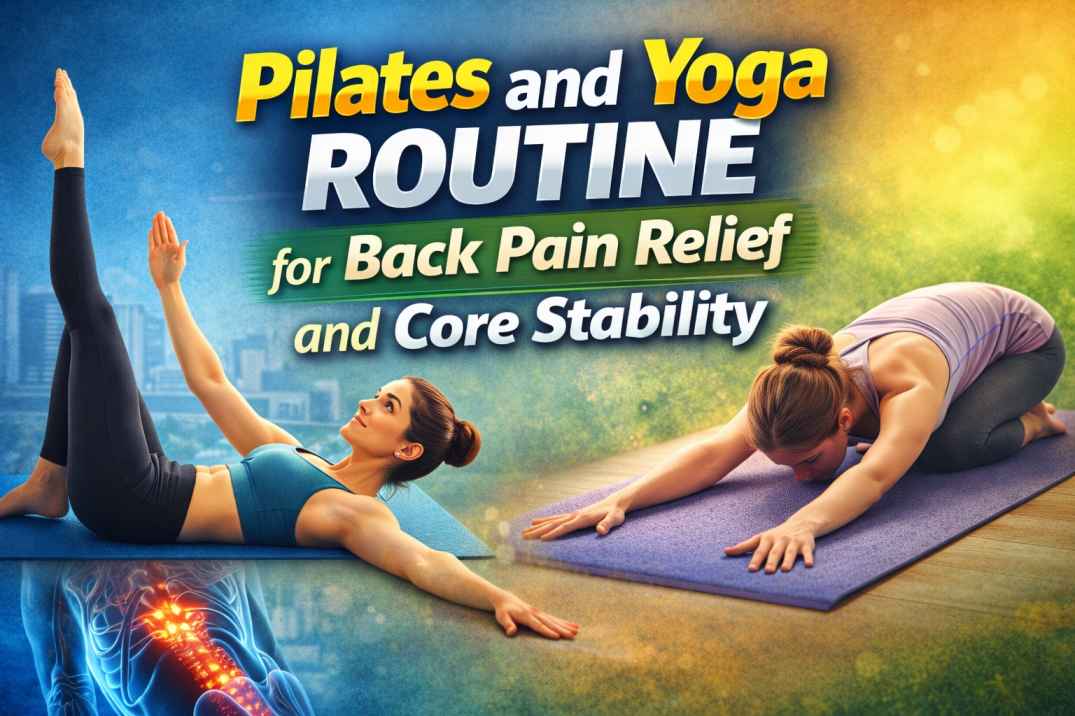
This is where pilates and yoga for back pain come into play. These two powerful practices focus on core stability, posture correction, controlled movement, and mind-body awareness—making them highly effective for both preventing and relieving back pain.
In this comprehensive guide, you will learn how Pilates and yoga work together, the benefits they offer, and a step-by-step routine you can follow for long-term relief and core strength.
Understanding Back Pain and Its Causes
Before starting any routine, it is important to understand why back pain occurs.
Common causes include:
- Poor posture while sitting or standing
- Weak core muscles
- Tight hamstrings and hip flexors
- Sedentary lifestyle
- Improper lifting techniques
- Stress and muscle tension
The spine relies heavily on surrounding muscles for support. When these muscles are weak or imbalanced, the spine experiences strain, leading to discomfort and pain.
Why Choose Pilates and Yoga for Back Pain
Both Pilates and yoga are low-impact yet highly effective forms of exercise that focus on alignment, flexibility, and strength.
Benefits of Pilates
Pilates emphasizes controlled movements and core engagement. It strengthens deep abdominal muscles, improves posture, and enhances spinal stability.
Key benefits:
- Strengthens core muscles
- Improves posture and alignment
- Reduces strain on the spine
- Enhances body awareness
Benefits of Yoga
Yoga focuses on flexibility, breathing, and relaxation. It helps release tension, improve mobility, and calm the nervous system.
Key benefits:
- Increases flexibility
- Relieves muscle tension
- Improves blood circulation
- Reduces stress and anxiety
When combined, pilates and yoga for back pain provide a balanced approach—strengthening weak areas while relaxing tight muscles.
Importance of Core Stability
Core stability is essential for a healthy back. The core includes not just the abdominal muscles but also the lower back, hips, and pelvis.
A strong core:
- Supports the spine
- Reduces pressure on the lower back
- Improves posture
- Prevents injuries
Both Pilates and yoga focus heavily on building core strength, making them ideal for long-term back pain relief.
Preparing for Your Routine
Before starting your routine:
- Choose a quiet and comfortable space
- Use a yoga mat
- Wear comfortable clothing
- Warm up for 5–10 minutes
- Avoid sudden or jerky movements
If you have severe or chronic pain, consult a healthcare professional before beginning.
Step-by-Step Pilates and Yoga Routine for Back Pain
This routine combines gentle yoga stretches with core-strengthening Pilates exercises. Practice 4–5 times a week for best results.
1. Cat-Cow Stretch (Yoga)
This movement improves spinal flexibility and relieves tension.
How to do it:
- Start on your hands and knees
- Inhale, arch your back (cow pose)
- Exhale, round your spine (cat pose)
- Repeat slowly for 10–12 breaths
2. Pelvic Tilt (Pilates)
This exercise activates core muscles and supports the lower back.
How to do it:
- Lie on your back with knees bent
- Flatten your lower back against the floor
- Engage your core and tilt your pelvis
- Hold for a few seconds and release
- Repeat 10–15 times
3. Child’s Pose (Yoga)
A relaxing stretch that releases tension in the back and shoulders.
How to do it:
- Sit back on your heels
- Stretch your arms forward
- Lower your chest toward the floor
- Hold for 30–60 seconds
4. Dead Bug (Pilates)
A powerful core exercise that improves coordination and stability.
How to do it:
- Lie on your back with arms and legs raised
- Lower opposite arm and leg slowly
- Keep your lower back pressed to the floor
- Alternate sides for 10–12 repetitions
5. Cobra Pose (Yoga)
Strengthens the lower back and improves spinal extension.
How to do it:
- Lie on your stomach
- Place hands under shoulders
- Lift your chest while keeping hips grounded
- Hold for 15–20 seconds
6. Glute Bridge (Pilates)
Strengthens the lower back, glutes, and core.
How to do it:
- Lie on your back with knees bent
- Lift your hips toward the ceiling
- Engage your core and glutes
- Hold for 5–10 seconds
- Repeat 10–12 times
7. Seated Forward Bend (Yoga)
Stretches the hamstrings and reduces lower back tension.
How to do it:
- Sit with legs extended
- Reach toward your toes
- Keep your spine long
- Hold for 20–30 seconds
8. Plank (Pilates/Yoga)
Builds strong core muscles essential for spinal support.
How to do it:
- Get into a push-up position
- Keep your body in a straight line
- Engage your core
- Hold for 20–40 seconds
9. Supine Twist (Yoga)
Relieves spinal tension and improves mobility.
How to do it:
- Lie on your back
- Bend one knee and twist it across your body
- Extend the opposite arm
- Hold for 20–30 seconds each side
10. Bird Dog (Pilates)
Improves balance and strengthens the lower back.
How to do it:
- Start on hands and knees
- Extend opposite arm and leg
- Keep your core engaged
- Hold for a few seconds
- Alternate sides for 10 repetitions
Tips for Best Results
To maximize the benefits of pilates and yoga for back pain, follow these tips:
- Practice consistently
- Focus on proper form rather than speed
- Breathe deeply during each movement
- Avoid overexertion
- Gradually increase intensity
Common Mistakes to Avoid
Avoid these common errors to prevent further strain:
- Skipping warm-up
- Forcing stretches beyond comfort
- Holding your breath
- Poor posture during exercises
- Inconsistent practice
How Long Before You See Results
Results vary depending on consistency and severity of pain.
- Initial relief: 1–2 weeks
- Improved flexibility: 3–4 weeks
- Stronger core and reduced pain: 6–8 weeks
Regular practice leads to long-term improvements and reduced risk of recurrence.
Who Can Benefit from This Routine
This routine is suitable for:
- Office workers with sedentary lifestyles
- Individuals with mild to moderate back pain
- Fitness beginners
- People recovering from minor injuries
- Anyone looking to improve posture and core strength
When to Avoid or Modify Exercises
You should modify or avoid exercises if you:
- Have severe or acute back pain
- Experience sharp or shooting pain
- Have recent spinal injuries
- Are advised against exercise by a doctor
Always listen to your body and prioritize safety.
Long-Term Benefits of Pilates and Yoga
Practicing pilates and yoga for back pain offers more than just relief.
Long-term benefits include:
- Improved posture
- Stronger core muscles
- Better flexibility
- Reduced stress levels
- Enhanced overall well-being
Conclusion
Back pain does not have to be a permanent part of your life. With the right approach, it is possible to relieve discomfort and build a strong, stable body.
Incorporating pilates and yoga for back pain into your routine provides a holistic solution—strengthening the core, improving flexibility, and promoting relaxation. The combination of mindful movement and controlled exercises helps address the root causes of pain rather than just masking symptoms.
By practicing consistently and maintaining proper form, you can achieve lasting relief, improved posture, and a healthier, more balanced lifestyle.